
How to Get Credit Card Late Fee Waived: A Quick Guide
By Egor · Updated · 4 min read · Money & bills

If you missed a credit card payment by accident for the first time, you can usually get the late fee waived simply by asking your issuer. Call the customer service number on the back of your card, pay the outstanding balance immediately, and politely explain that you have a clean payment history.
How to Get Credit Card Late Fee Waived After One Mistake
Missing a credit card payment due date is easy to do, especially when you are balancing multiple bills, subscriptions, and buy-now-pay-later installments across different apps. The good news is that if you usually pay on time, credit card issuers are often willing to reverse a late fee as a courtesy.
Learning how to get credit card late fee waived comes down to acting quickly, fixing the missed payment, and asking politely.
From the Road — One Missed Payment Can Cost You Money
As an independent field service technician in the Dallas area, my workdays can get pretty busy. Between customer appointments, driving, managing job expenses, and keeping track of earnings, it's easy to lose sight of upcoming payment dates.
When you have multiple credit cards, subscriptions, loans, and installment payments, relying on memory alone isn't a great strategy.
That's one of the reasons I developed VaultHub. I wanted a single financial calendar where I could see upcoming bills, expected income, recurring subscriptions, and daily expenses alongside my work activity.
A late fee might seem like a small expense, but it's money you could have kept. Staying organized is one of the simplest ways to avoid unnecessary financial costs.
— Yehor Yurchenko, Field Service Technician & VaultHub Developer
Step 1: Pay the Due Amount Immediately
Before you reach out to your credit card company, log into your account and make the payment right away. Banks are far more likely to grant a fee waiver if they see that the account is already brought current.
- Pay at least the minimum: To stop further complications, pay the minimum amount due or the full statement balance.
- Note the transaction: Keep track of the date and time you made the payment so you can reference it during your request.
Step 2: Choose How to Contact Your Card Issuer
You can request a fee waiver through a few simple channels:
- Phone Call: Call the phone number on the back of your card. Talking to a phone representative is often the fastest way to get an immediate approval.
- In-App Live Chat: Many bank apps offer secure live messaging. This is great if you prefer not to speak on the phone.
- Secure Message Center: If chat is unavailable, send a message through your online banking portal.
Step 3: Use a Simple Script
When speaking with customer support, keep your message clear, polite, and brief. You do not need a lengthy excuse.
Sample Script for Calling or Chatting
"Hello, I noticed a late fee on my latest statement. I have always made my payments on time in the past, but I accidentally missed this due date. I have already submitted the payment to bring my account current. Since this was a one-time mistake, would you be able to waive the late fee as a courtesy?"
If the first agent says no, remain polite. You can ask if a manager can review your long-standing account history, or try calling back later to speak with a different representative.
Step 4: Ask About Interest and Credit Bureau Reporting
When a payment is late, two other factors come into play alongside the late fee:
- Interest charges: Ask if any residual interest or interest charges related to the late payment can also be adjusted.
- Credit reporting: Credit card issuers generally do not report a payment as late to credit bureaus (Equifax, Experian, TransUnion) until it is at least 30 days past due. If you fix the issue within a few days, your credit score will usually remain untouched.
How to Avoid Missing Future Payments
Getting a fee waived once is usually easy, but issuers rarely grant repeat waivers in a short timeframe. Keeping track of your upcoming due dates is key to protecting your budget.
- Set up automatic payments: Enable AutoPay for at least the minimum payment so you are never late by accident.
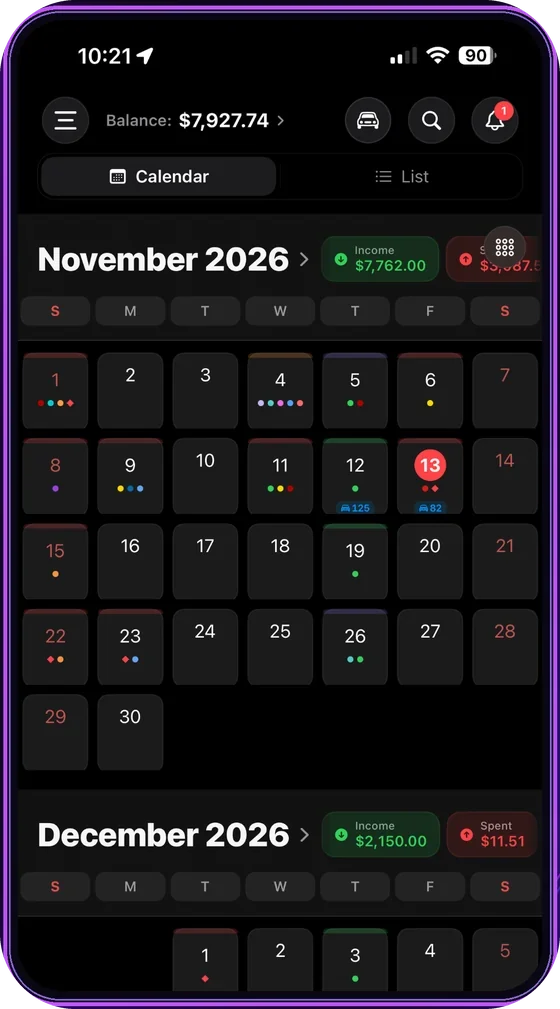
- Use a unified calendar: If you manage multiple credit cards, installments, and subscriptions alongside daily expenses, keeping them on a single view helps prevent surprise due dates. An app like VaultHub, which organizes your bills and calendar on your private iPhone without bank logins, makes it simple to monitor due dates ahead of time.
- Adjust your due dates: Many card issuers let you change your monthly payment due date online so all your bills line up with your payday.
If you are self-employed or drive for work, tracking your schedule and vehicle expenses alongside your bills ensures you keep complete control over your cash flow. (If you need to calculate work mileage deductions, check out our free mileage deduction calculator).
Track every business mile automatically
VaultHub logs your drives with GPS and applies the IRS rate for each trip's date. Estimate your deduction or get the app.
General information, not tax advice. Rules can depend on your situation — check with a tax professional.